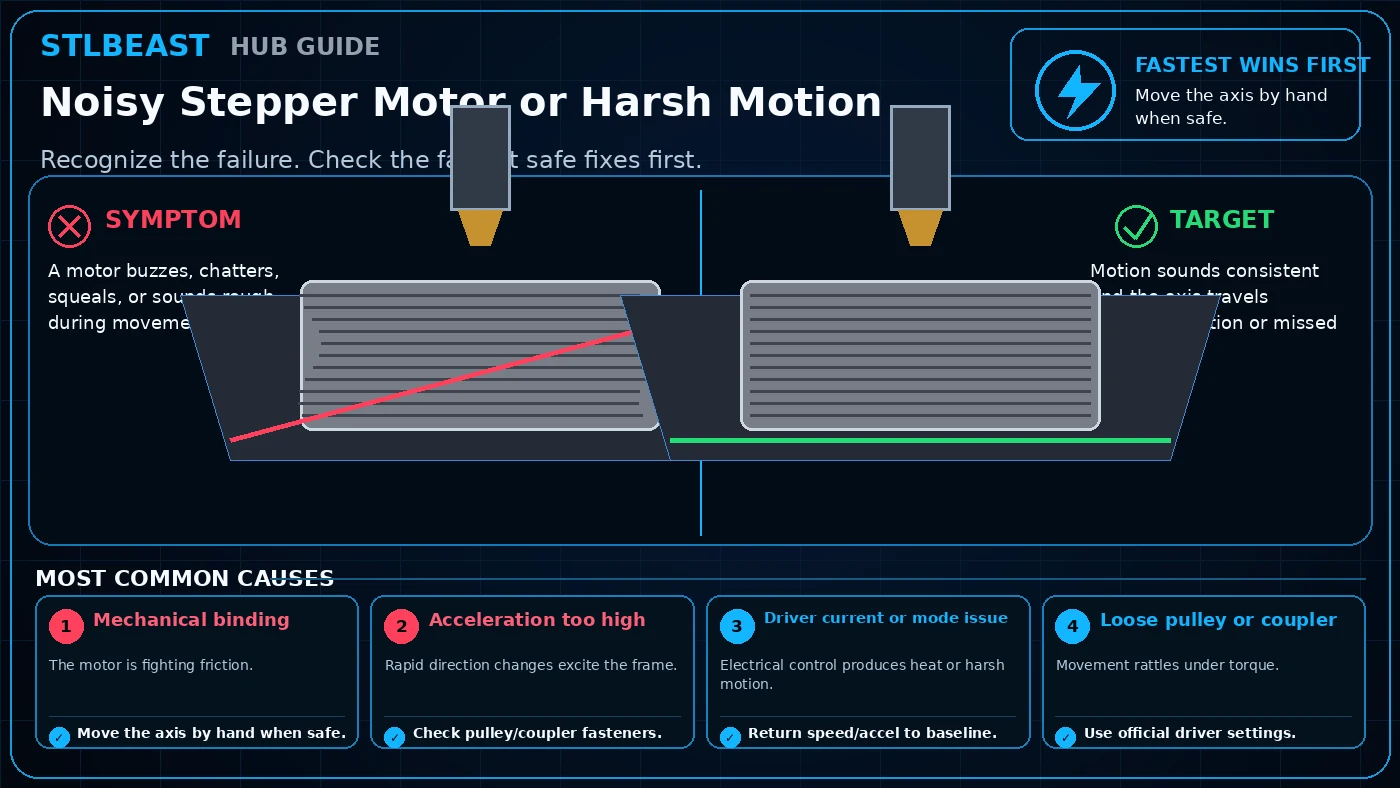
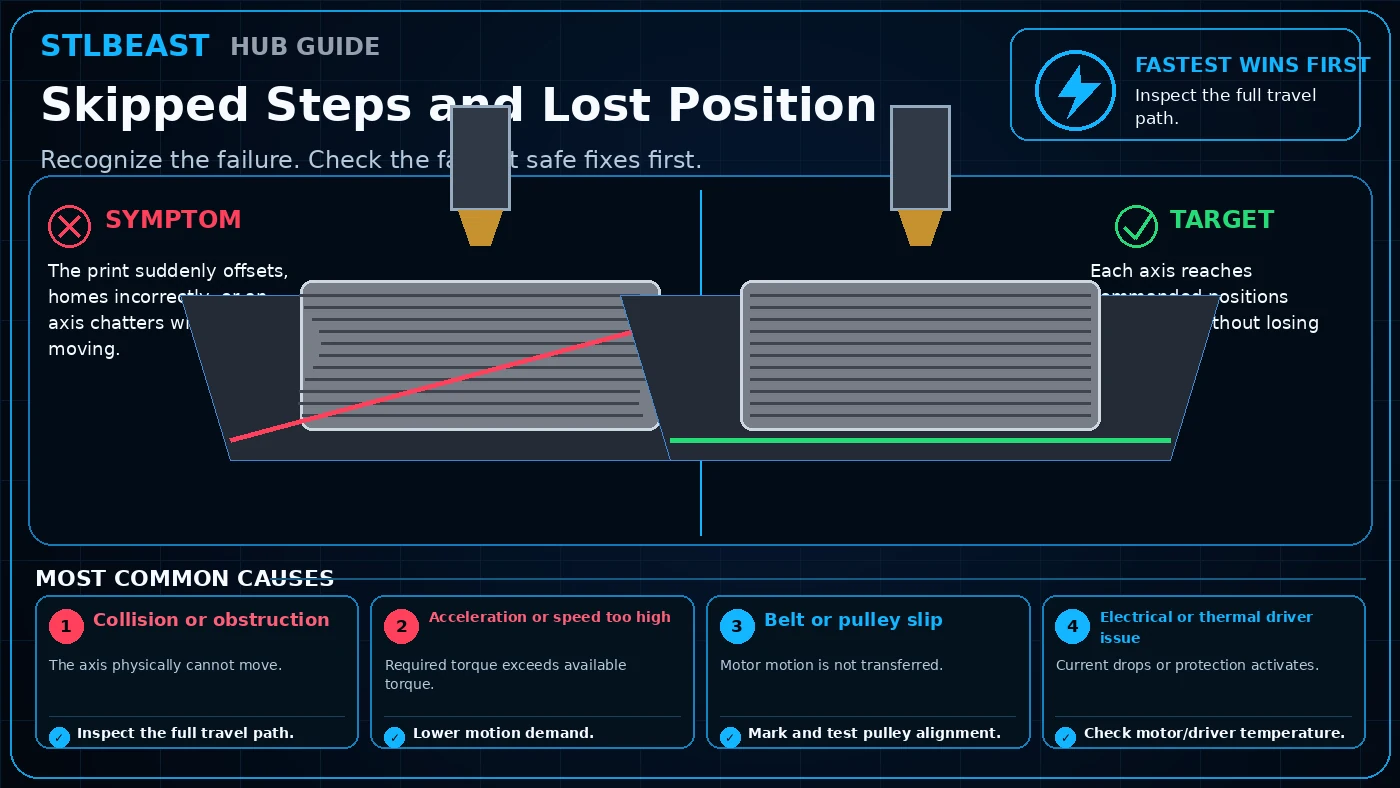
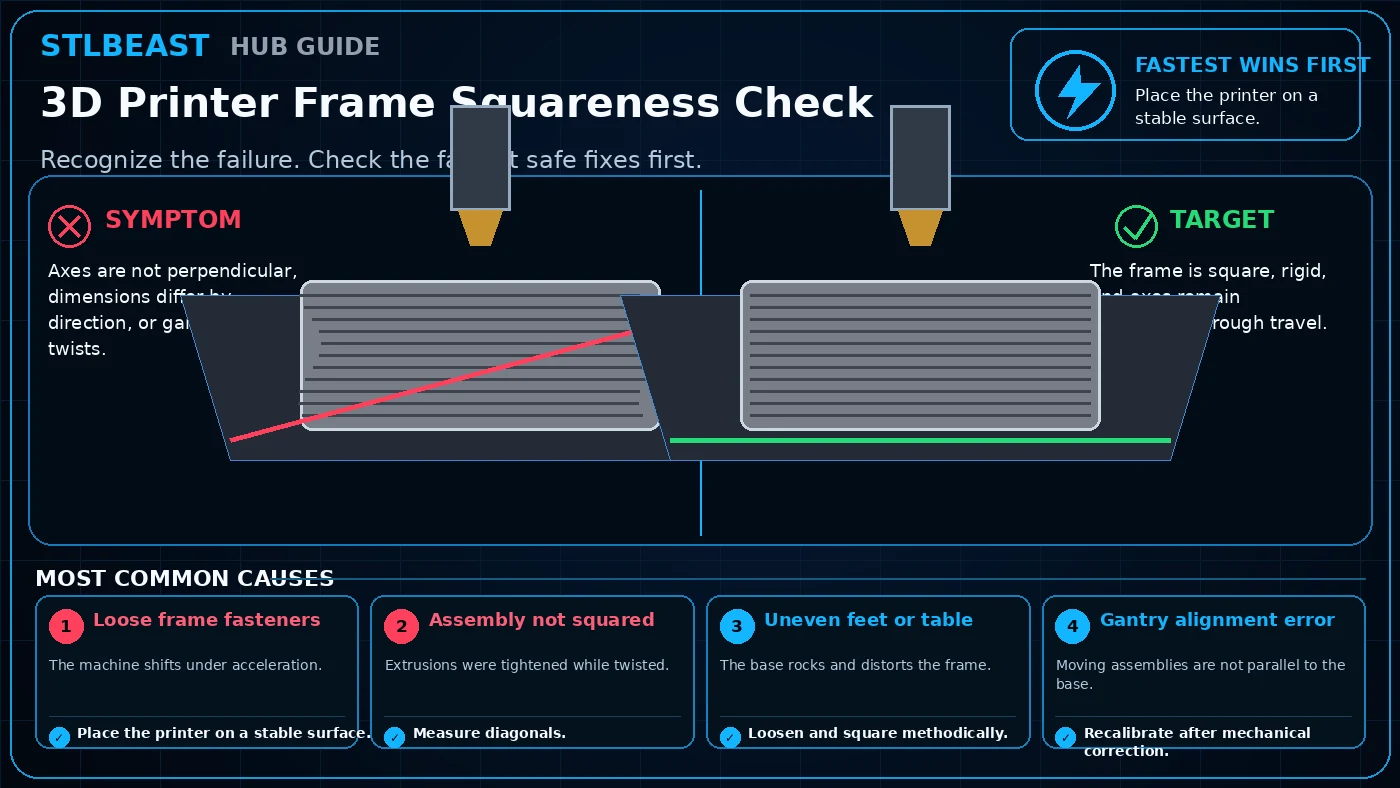
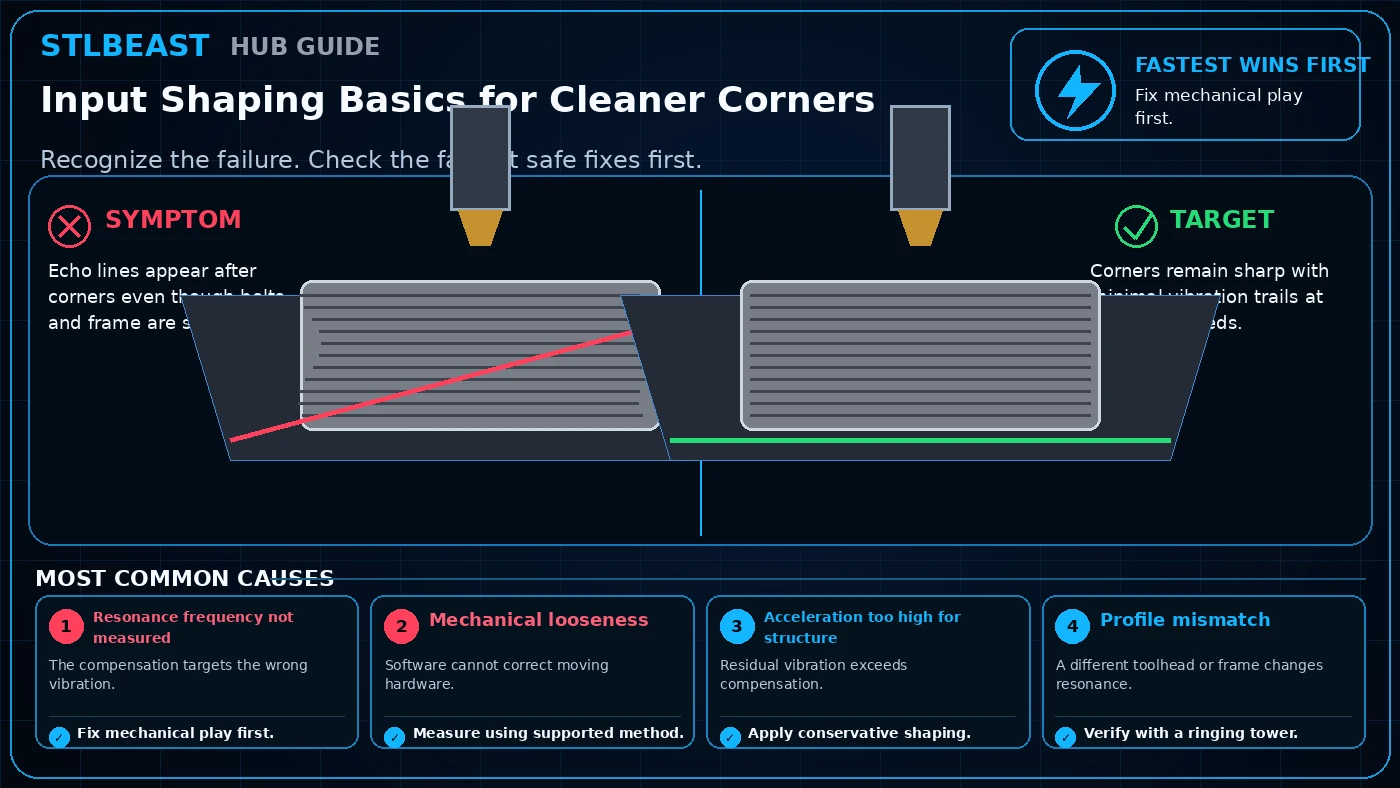
A detailed STLBEAST repair guide to separate normal motor tones from binding, driver, or current problems. Learn how to recognize the symptom, rank the likely causes, apply safe fixes in order, verify the result, and prevent the failure from returning.
Start hereStart with move the axis by hand when safe, then check pulley/coupler fasteners. Confirm the result with a short representative test before changing additional settings.
First safe actionRun the first safe check and change one variable at a time.
Proof targetA small representative test no longer shows the original symptom.
Match the failed area to the visual before changing a setting.
Repair progress0 of 8 complete
Step 1 of 8
Document the failure and confirm that it matches this guide: A motor buzzes, chatters, squeals, or sounds rough during movement.
Keep the problem and target visual open while you make this change.
Why this matters
The motor is fighting friction.
Setting or checkAcceleration
Return to a conservative baseline before diagnosing mechanical motion.
Expected result
Motion sounds consistent and the axis travels without vibration or missed steps.
Step 2 of 8
Return extreme overrides to a known printer, nozzle, material, and slicer profile so the diagnosis starts from a stable baseline.
Keep the problem and target visual open while you make this change.
Why this matters
Rapid direction changes excite the frame.
Setting or checkTravel speed
High speed can expose play, binding, or resonance.
Expected result
The same test succeeds at least twice without a new artifact appearing.
Step 3 of 8
Check mechanical binding. Move the axis by hand when safe.
Keep the problem and target visual open while you make this change.
Why this matters
Electrical control produces heat or harsh motion.
Setting or checkInput shaping
Apply only after belts, frame, wheels, rails, and pulleys are sound.
Expected result
No safety warning, unusual noise, heater error, binding, or material damage is introduced by the change.
Step 4 of 8
Check acceleration too high. Check pulley/coupler fasteners.
Keep the problem and target visual open while you make this change.
Why this matters
Movement rattles under torque.
Setting or checkMotor current
Use only manufacturer-supported values; excess current creates heat.
Expected result
The successful values are recorded with printer, nozzle, material, slicer, and date.
Step 5 of 8
Inspect driver current or mode issue. Return speed/accel to baseline.
Keep the problem and target visual open while you make this change.
Why this matters
The motor is fighting friction.
Setting or checkAcceleration
Return to a conservative baseline before diagnosing mechanical motion.
Expected result
Motion sounds consistent and the axis travels without vibration or missed steps.
Step 6 of 8
Rule out loose pulley or coupler. Use official driver settings.
Keep the problem and target visual open while you make this change.
Why this matters
Rapid direction changes excite the frame.
Setting or checkTravel speed
High speed can expose play, binding, or resonance.
Expected result
The same test succeeds at least twice without a new artifact appearing.
Step 7 of 8
Change only the single setting or hardware condition supported by the evidence, then run a small test that reproduces the original failure.
Keep the problem and target visual open while you make this change.
Why this matters
Electrical control produces heat or harsh motion.
Setting or checkInput shaping
Apply only after belts, frame, wheels, rails, and pulleys are sound.
Expected result
No safety warning, unusual noise, heater error, binding, or material damage is introduced by the change.
Step 8 of 8
Compare the test against the target condition, record the successful value, and save it in a printer/material profile before repeating the full print.
Keep the problem and target visual open while you make this change.
Why this matters
Movement rattles under torque.
Setting or checkMotor current
Use only manufacturer-supported values; excess current creates heat.
Expected result
The successful values are recorded with printer, nozzle, material, slicer, and date.
Controlled test log
Change one variable, then record what happened
This keeps temperature, retraction, speed, mechanical, and material tests from blending together. The history stays private in this browser.