Support Scars and Rough Undersides
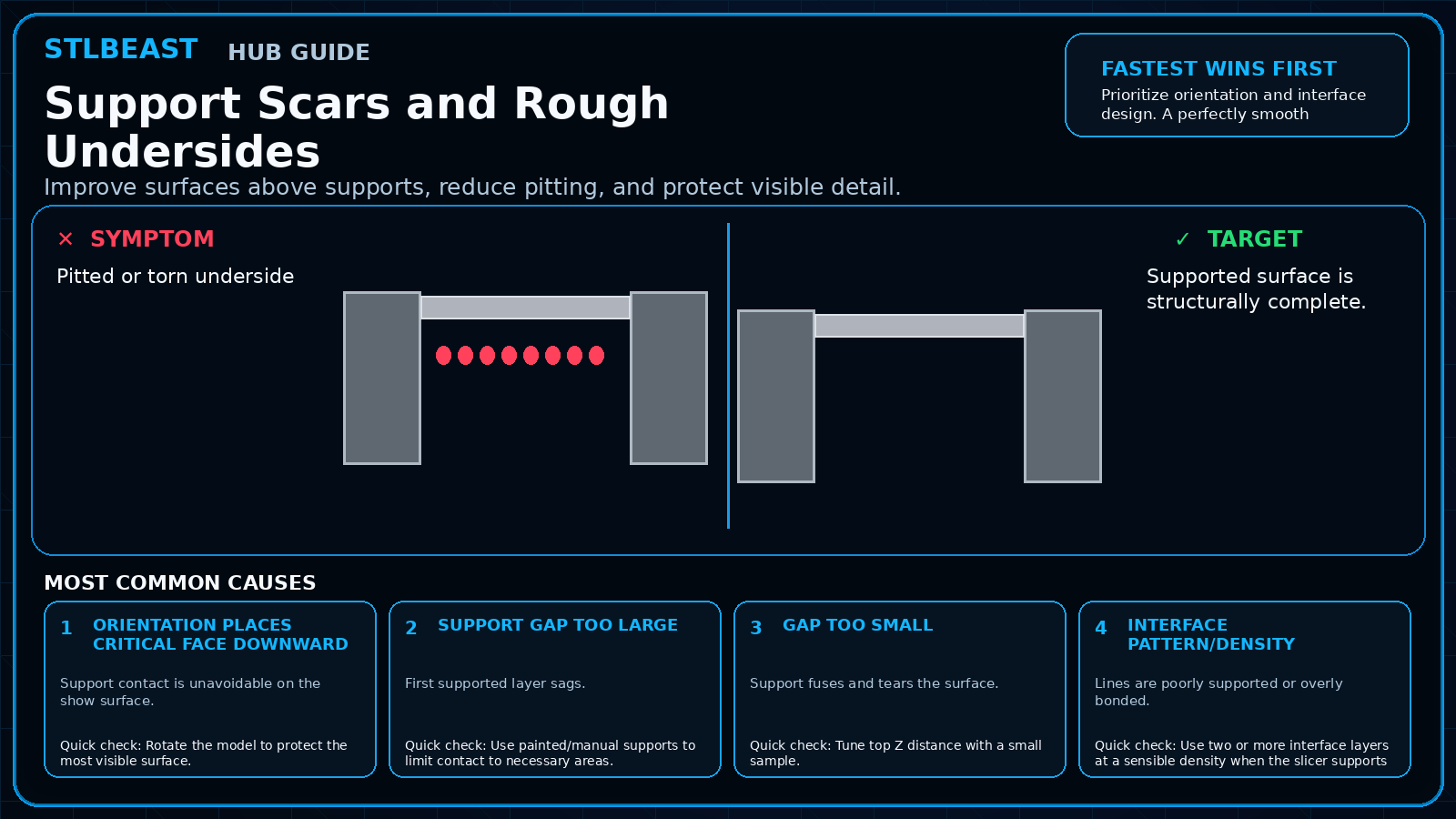
Improve surfaces above supports, reduce pitting, and protect visible detail.
- Title matches “rough underside”
- Keyword match
- Title matches “rough”
Use normal language such as “hairy PETG print,” “clicking extruder and thin lines,” or “resin part stuck to the film.” The engine translates common descriptions into technical causes and explains why each answer matched.
Results are ranked by symptom, title, cause and equipment context.
Improve surfaces above supports, reduce pitting, and protect visible detail.
A detailed STLBEAST repair guide to set a predictable separation gap based on layer height and material. Learn how to recognize the symptom, rank the likely causes, apply safe fixes in order, verify the result, and prevent the failure from returning.
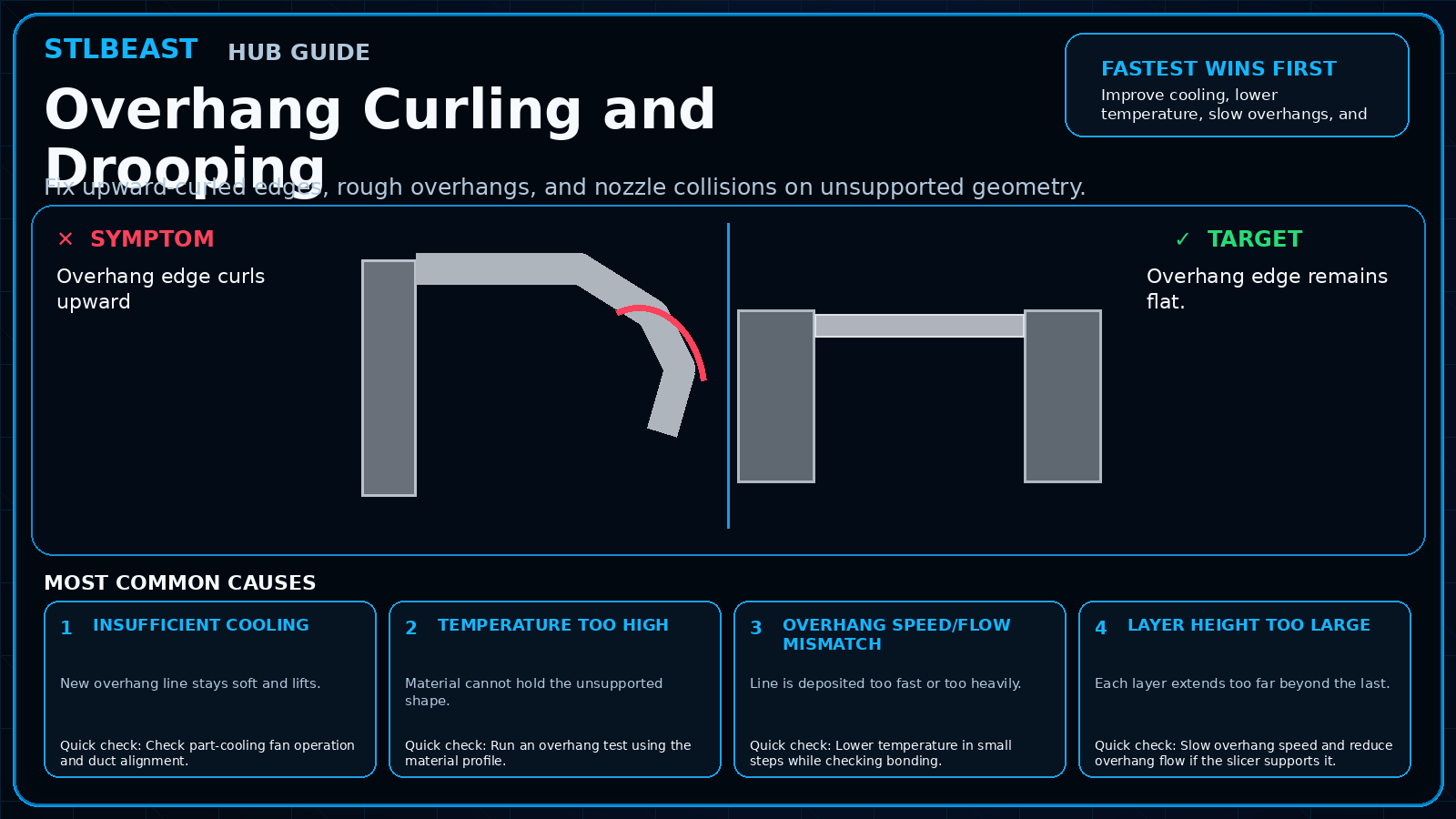
Fix upward-curled edges, rough overhangs, and nozzle collisions on unsupported geometry.
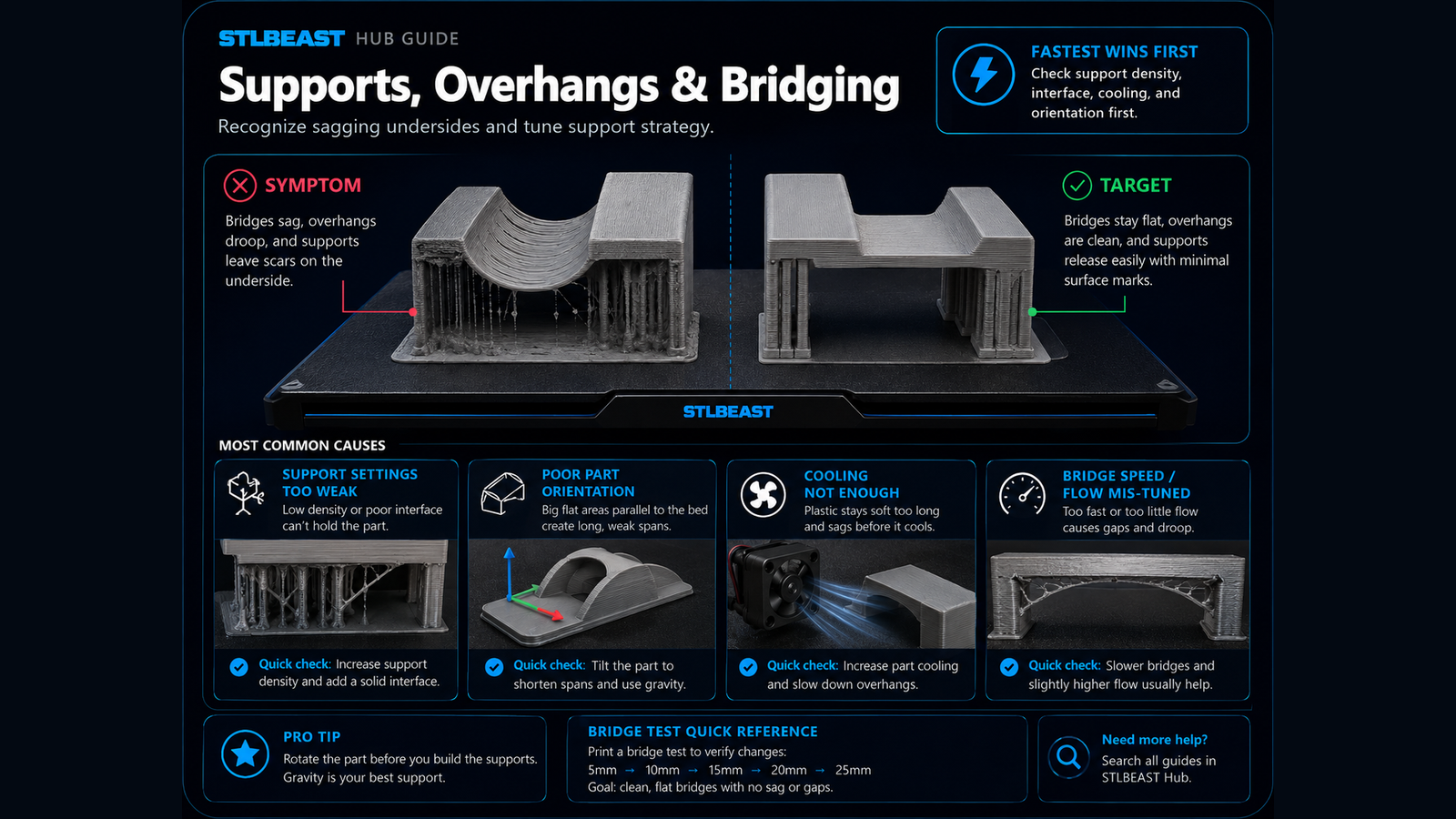
Make supports detach cleanly without destroying the underside or welding to the model.
A detailed STLBEAST repair guide to tune normal or tree supports using OrcaSlicer preview and interface controls. Learn how to recognize the symptom, rank the likely causes, apply safe fixes in order, verify the result, and prevent the failure from returning.
A detailed STLBEAST repair guide to restore smooth perimeter extrusion and stable motion. Learn how to recognize the symptom, rank the likely causes, apply safe fixes in order, verify the result, and prevent the failure from returning.
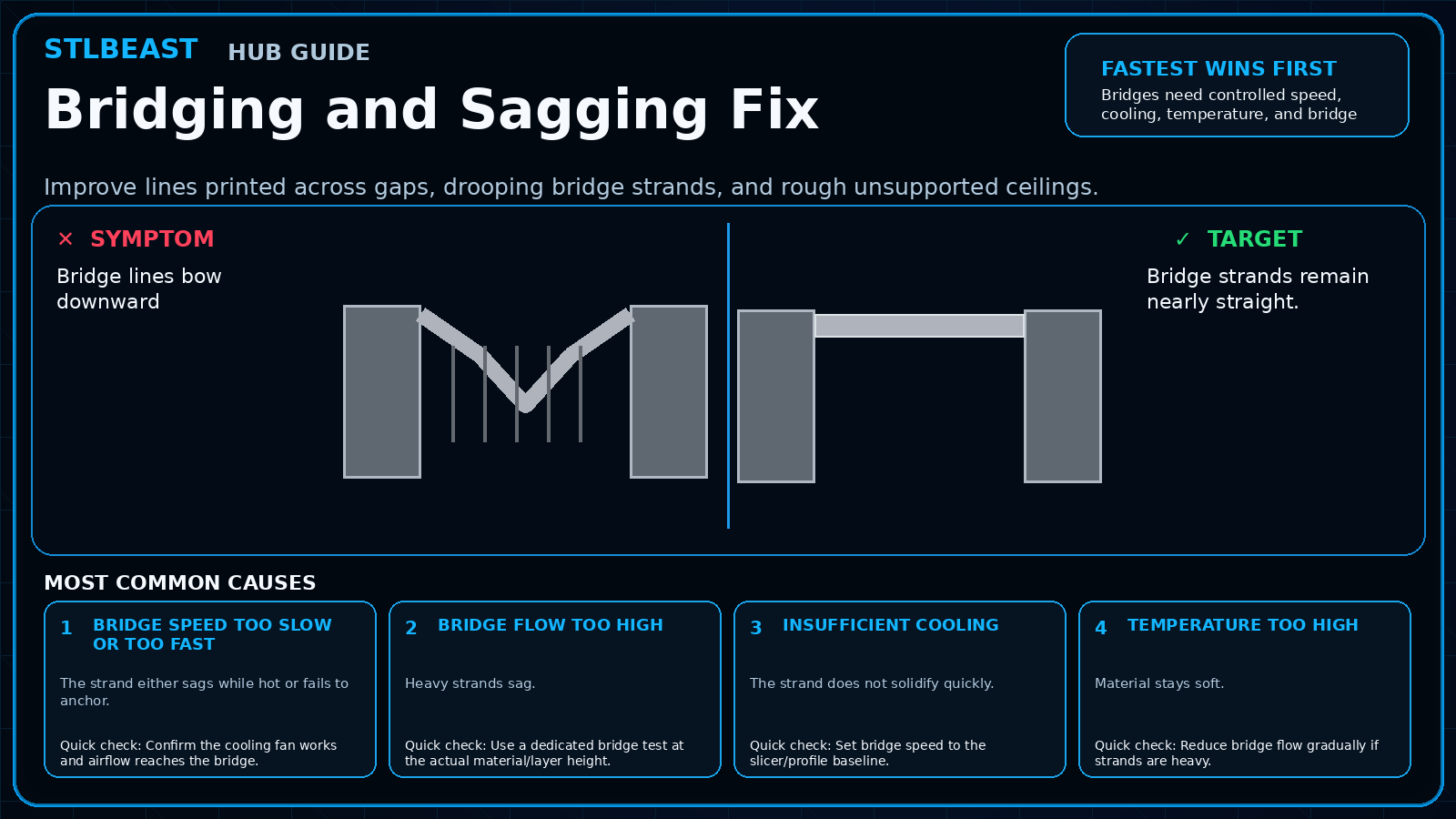
Improve lines printed across gaps, drooping bridge strands, and rough unsupported ceilings.
A detailed STLBEAST repair guide to find the support controls that matter most in Cura. Learn how to recognize the symptom, rank the likely causes, apply safe fixes in order, verify the result, and prevent the failure from returning.
A detailed STLBEAST repair guide to remove the obstruction without damaging fittings or the hotend. Learn how to recognize the symptom, rank the likely causes, apply safe fixes in order, verify the result, and prevent the failure from returning.
A detailed STLBEAST repair guide to remove raised ridges while preserving adhesion. Learn how to recognize the symptom, rank the likely causes, apply safe fixes in order, verify the result, and prevent the failure from returning.
A detailed STLBEAST repair guide to remove absorbed moisture without deforming the spool or polymer. Learn how to recognize the symptom, rank the likely causes, apply safe fixes in order, verify the result, and prevent the failure from returning.
A detailed STLBEAST repair guide to separate normal motor tones from binding, driver, or current problems. Learn how to recognize the symptom, rank the likely causes, apply safe fixes in order, verify the result, and prevent the failure from returning.
A detailed STLBEAST repair guide to control moisture, warping, and adhesion for nylon. Learn how to recognize the symptom, rank the likely causes, apply safe fixes in order, verify the result, and prevent the failure from returning.
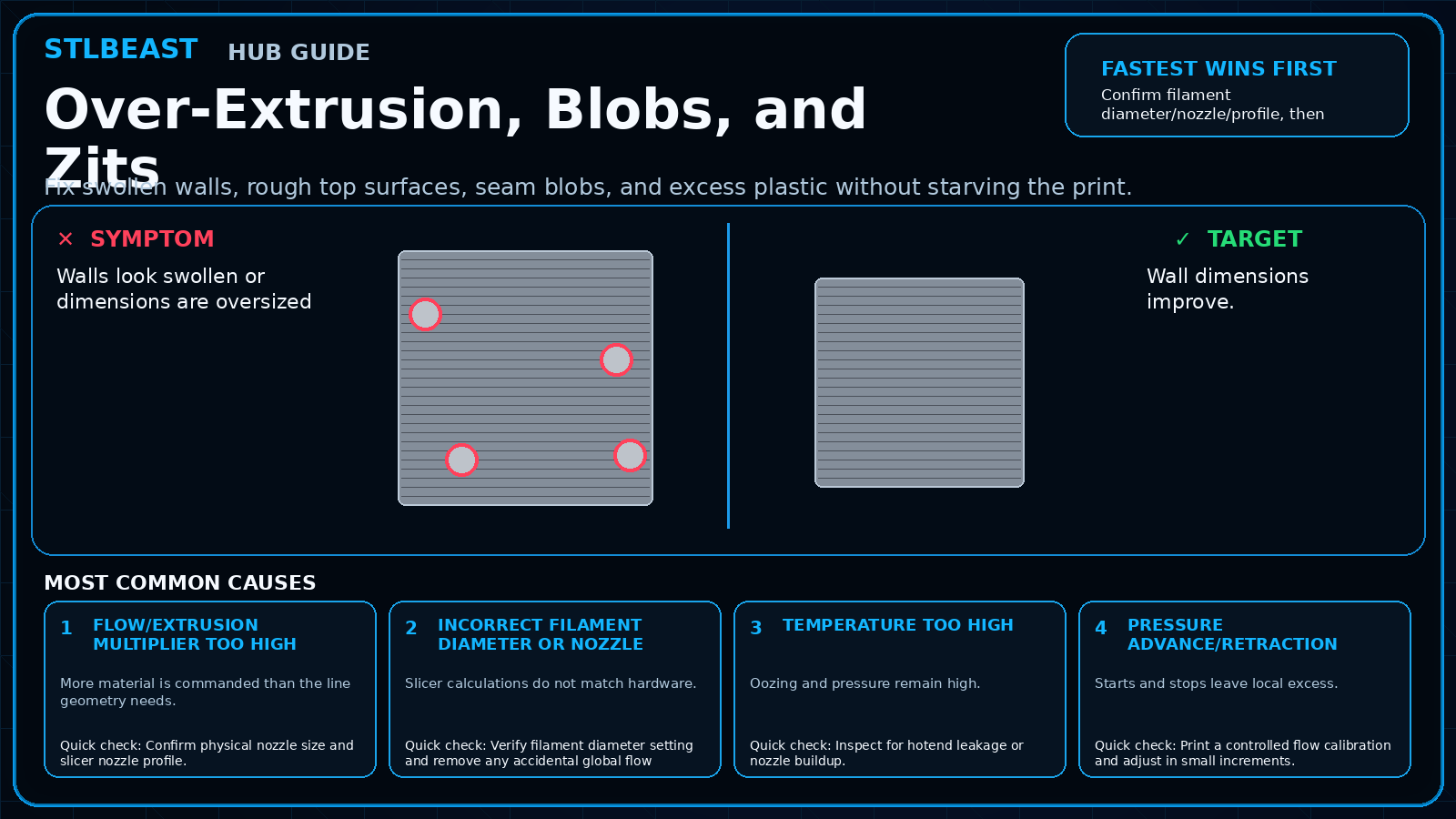
Fix swollen walls, rough top surfaces, seam blobs, and excess plastic without starving the print.
A detailed STLBEAST repair guide to clean uncured resin thoroughly while preserving detail and safety. Learn how to recognize the symptom, rank the likely causes, apply safe fixes in order, verify the result, and prevent the failure from returning.
A detailed STLBEAST repair guide to balance underside quality with easy removal. Learn how to recognize the symptom, rank the likely causes, apply safe fixes in order, verify the result, and prevent the failure from returning.
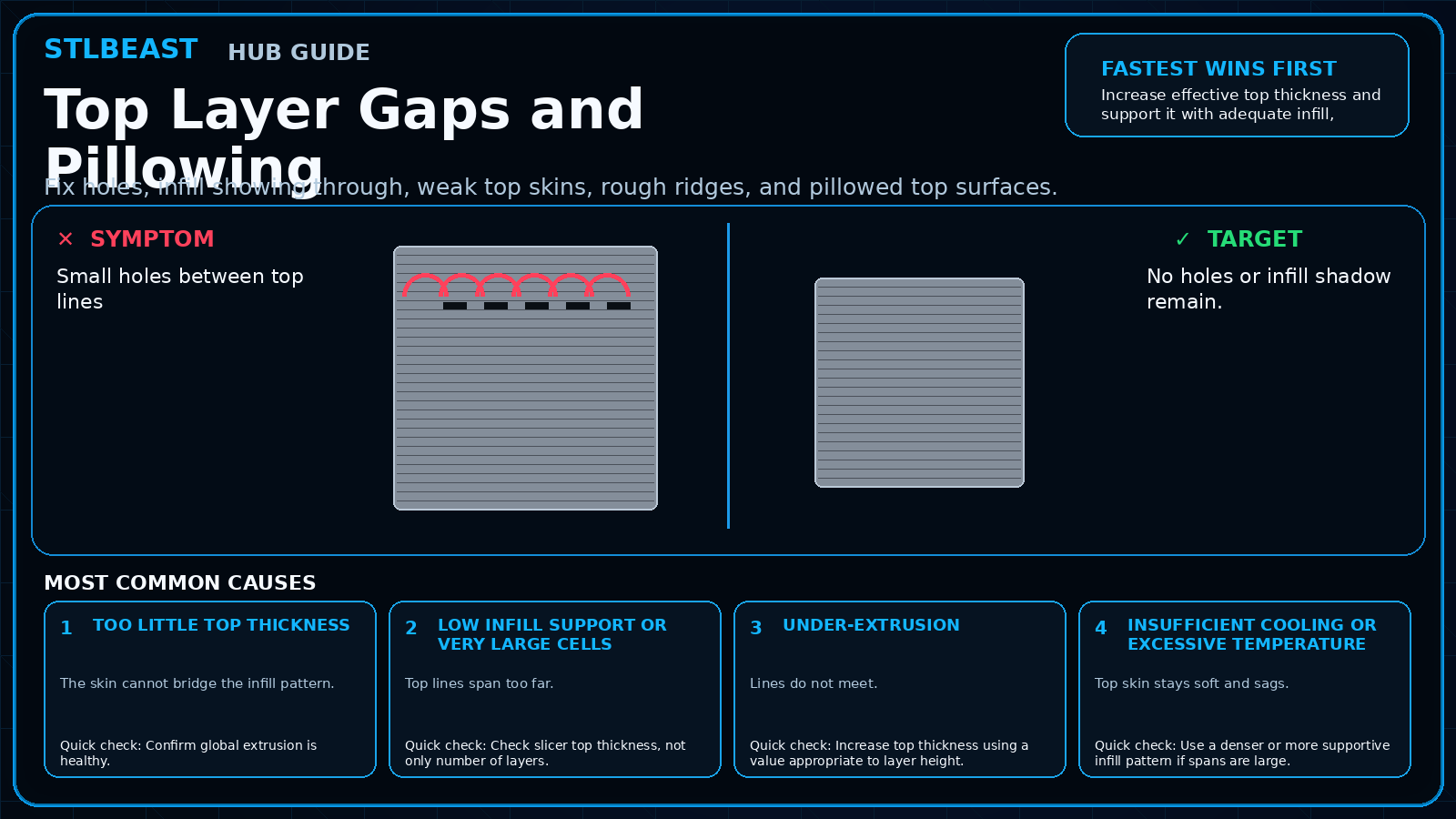
Fix holes, infill showing through, weak top skins, rough ridges, and pillowed top surfaces.
A detailed STLBEAST repair guide to remove texture caused by slicer settings or unstable extrusion. Learn how to recognize the symptom, rank the likely causes, apply safe fixes in order, verify the result, and prevent the failure from returning.
Increase continuous walls and bottom layers, correct under-extrusion and seams, orient to reduce leak paths, and pressure-test safely before using the part.
A detailed STLBEAST repair guide to correct mechanical geometry before calibration. Learn how to recognize the symptom, rank the likely causes, apply safe fixes in order, verify the result, and prevent the failure from returning.
A detailed STLBEAST repair guide to use abrasive filled materials without sacrificing flow or hardware. Learn how to recognize the symptom, rank the likely causes, apply safe fixes in order, verify the result, and prevent the failure from returning.
A detailed STLBEAST repair guide to balance paired belts without introducing racking. Learn how to recognize the symptom, rank the likely causes, apply safe fixes in order, verify the result, and prevent the failure from returning.
Clean and align the sensor path, inspect its connector, confirm filament diameter and flexibility, and adjust debounce or sensitivity only within the manufactur.
A detailed STLBEAST repair guide to square the X gantry before compensating in software. Learn how to recognize the symptom, rank the likely causes, apply safe fixes in order, verify the result, and prevent the failure from returning.
Let the part cool, use the right cutters and direction, remove large branches first, support delicate features, and finish contact marks gradually instead of te.
A detailed STLBEAST repair guide to identify random versus repeating layer variation. Learn how to recognize the symptom, rank the likely causes, apply safe fixes in order, verify the result, and prevent the failure from returning.
A detailed STLBEAST repair guide to control shrinkage across wide flat parts. Learn how to recognize the symptom, rank the likely causes, apply safe fixes in order, verify the result, and prevent the failure from returning.
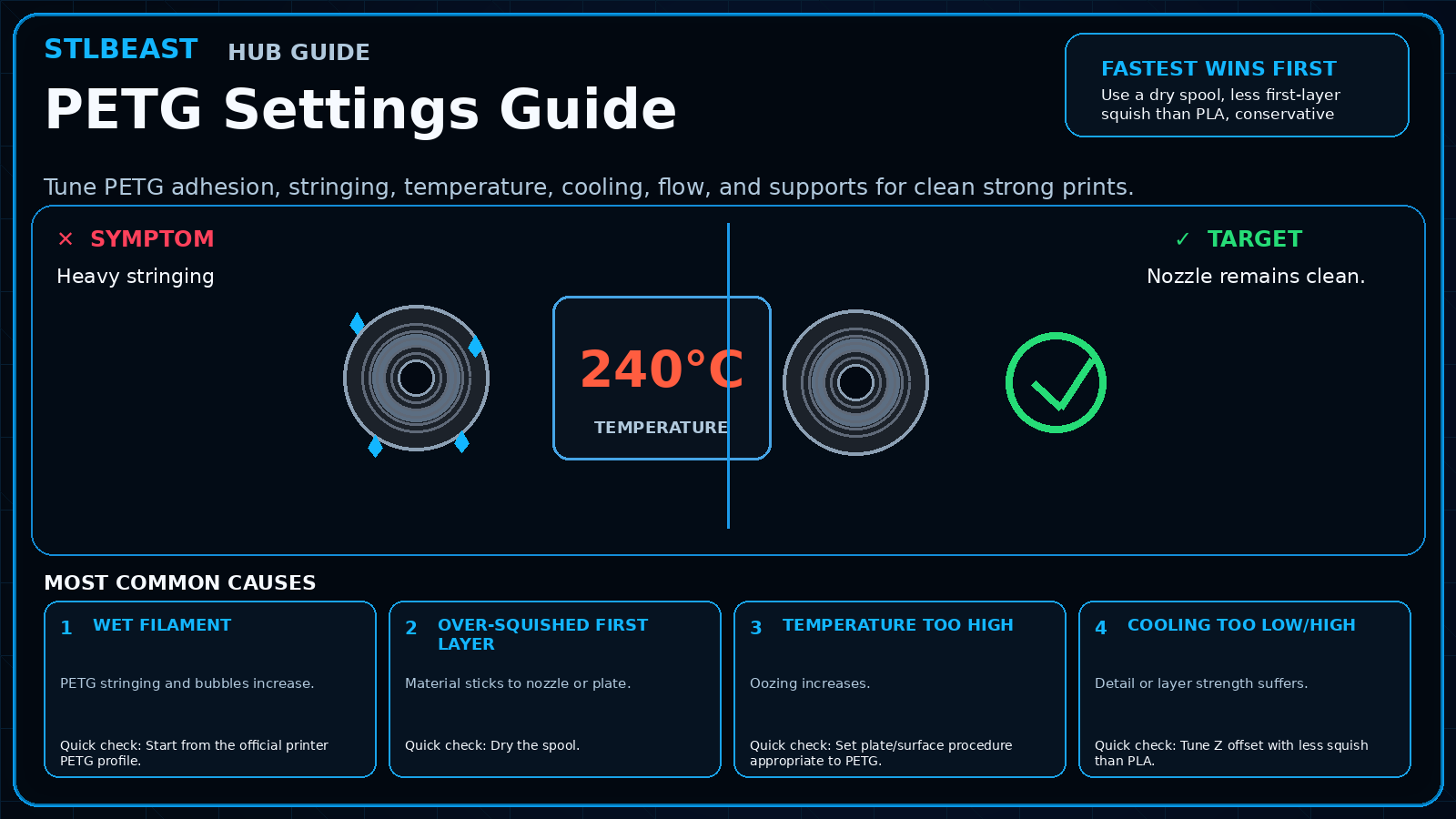
Tune PETG adhesion, stringing, temperature, cooling, flow, and supports for clean strong prints.
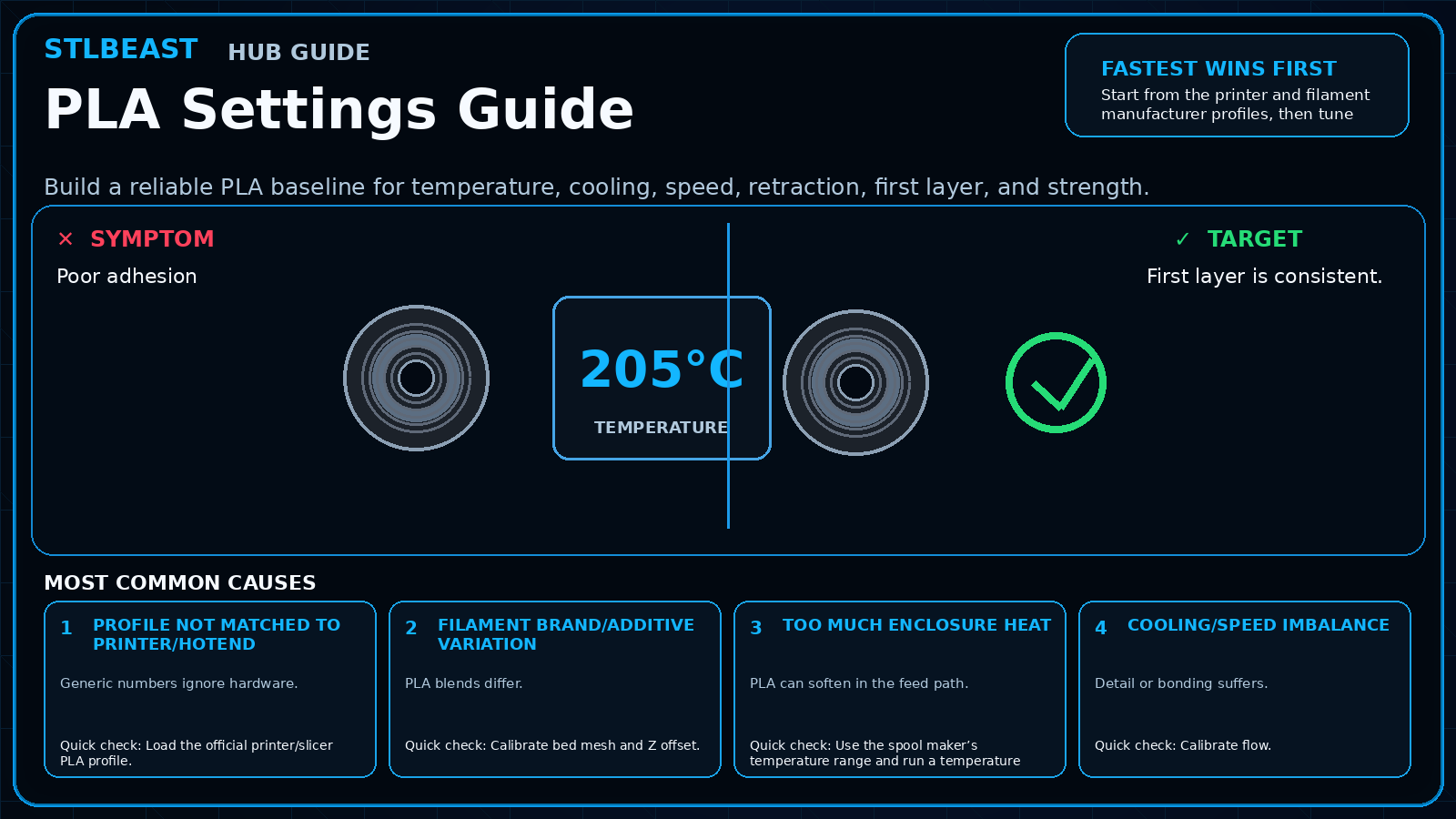
Build a reliable PLA baseline for temperature, cooling, speed, retraction, first layer, and strength.
A detailed STLBEAST repair guide to stop molten plastic leaking above the nozzle. Learn how to recognize the symptom, rank the likely causes, apply safe fixes in order, verify the result, and prevent the failure from returning.
Clean, dry, sand, and test the part; apply thin compatible primer coats, inspect defects, sand again if needed, then build colour in light layers.
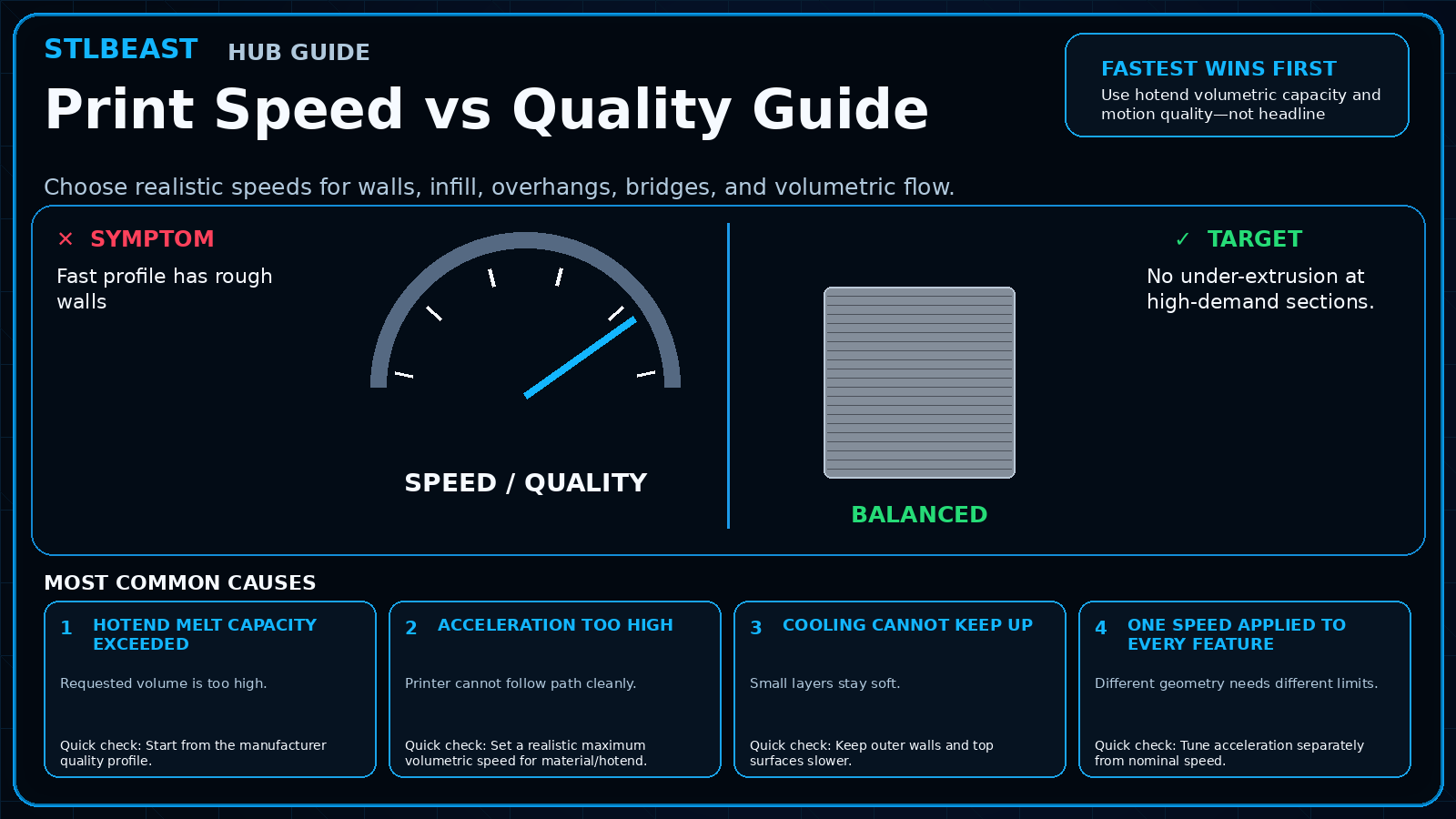
Choose realistic speeds for walls, infill, overhangs, bridges, and volumetric flow.
Fix first-layer squish, flow, seam blobs, clearance, support intrusion, and cooling, then verify with a small print-in-place calibration model.
Improve the tower’s first layer, width, cooling, speed, and placement, then reduce unnecessary tool changes or use a safer purge strategy.
A detailed STLBEAST repair guide to prevent trapped pressure and uncured resin in hollow models. Learn how to recognize the symptom, rank the likely causes, apply safe fixes in order, verify the result, and prevent the failure from returning.
A detailed STLBEAST repair guide to restore bottom-layer adhesion without excessive exposure. Learn how to recognize the symptom, rank the likely causes, apply safe fixes in order, verify the result, and prevent the failure from returning.
A detailed STLBEAST repair guide to strengthen support strategy without scarring the model. Learn how to recognize the symptom, rank the likely causes, apply safe fixes in order, verify the result, and prevent the failure from returning.
Start with safe support cleanup, use progressive grits, keep heat and dust controlled, preserve edges, and apply filler or primer only after the surface is clea.
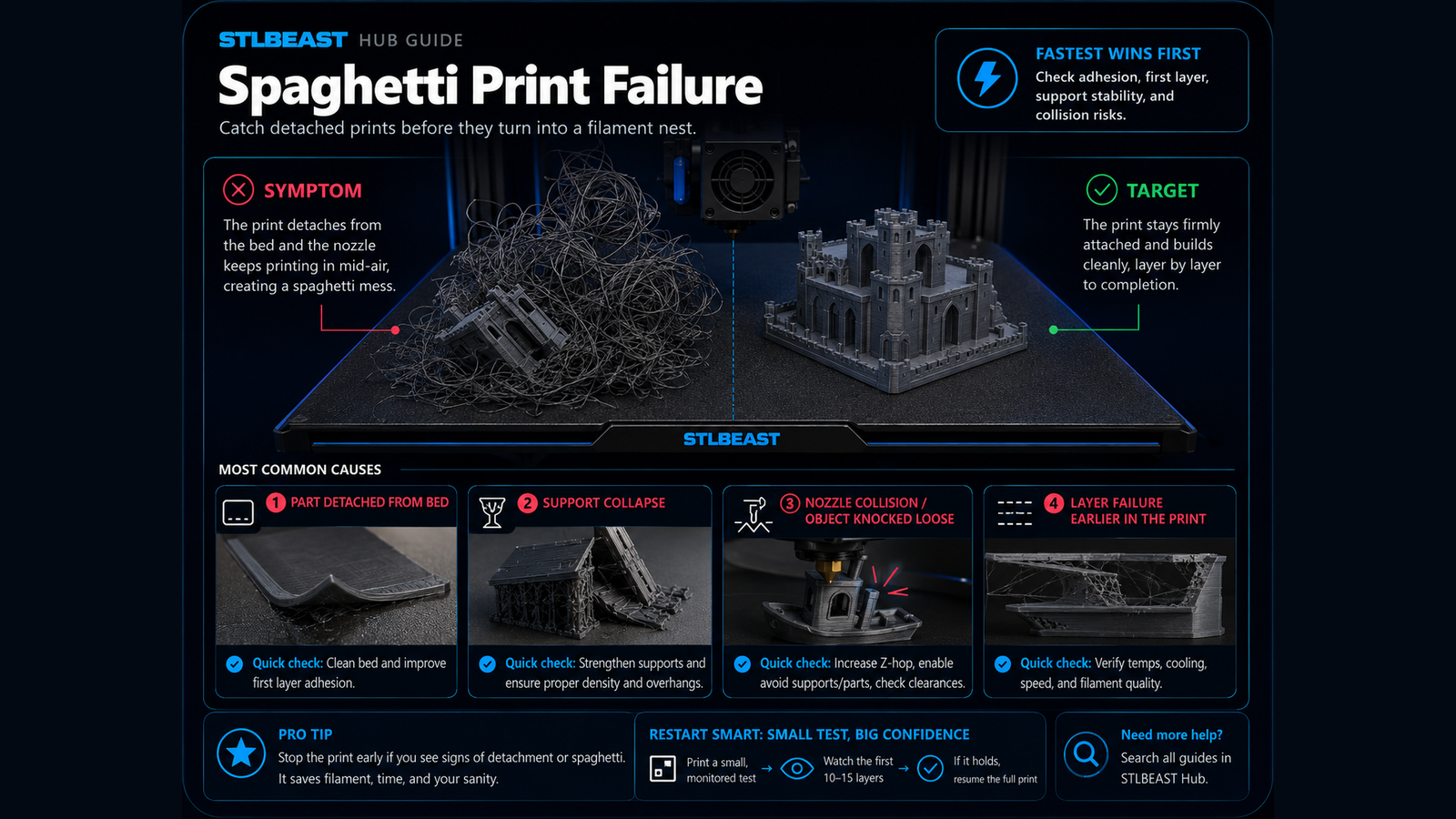
Fix prints that detach, shift, collapse, or continue extruding loose filament into a tangled spaghetti failure.
A detailed STLBEAST repair guide to improve textured-plate grip without excessive squish. Learn how to recognize the symptom, rank the likely causes, apply safe fixes in order, verify the result, and prevent the failure from returning.
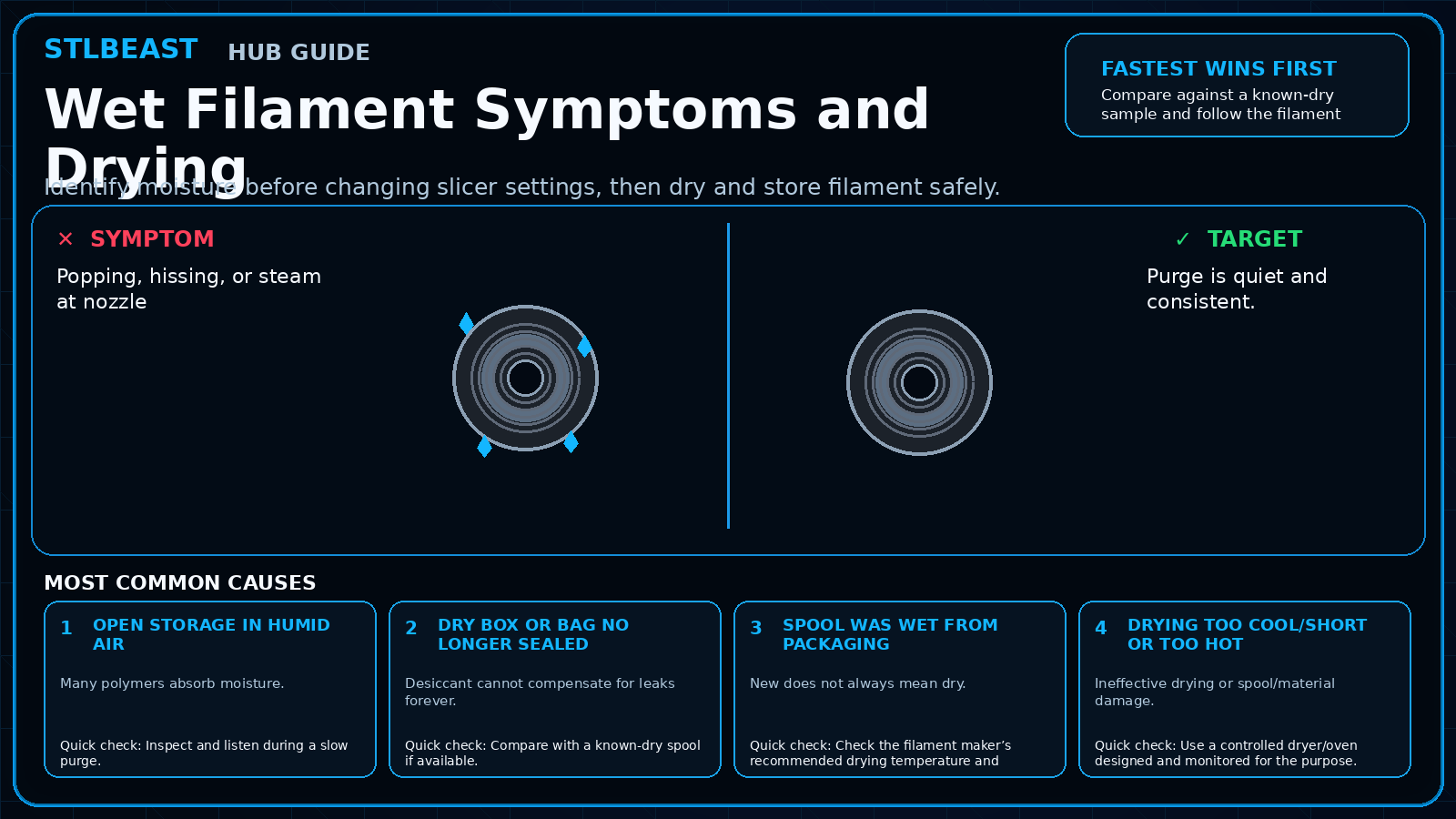
Identify moisture before changing slicer settings, then dry and store filament safely.
A detailed STLBEAST repair guide to restore smooth vertical travel and prevent banding or missed layers. Learn how to recognize the symptom, rank the likely causes, apply safe fixes in order, verify the result, and prevent the failure from returning.
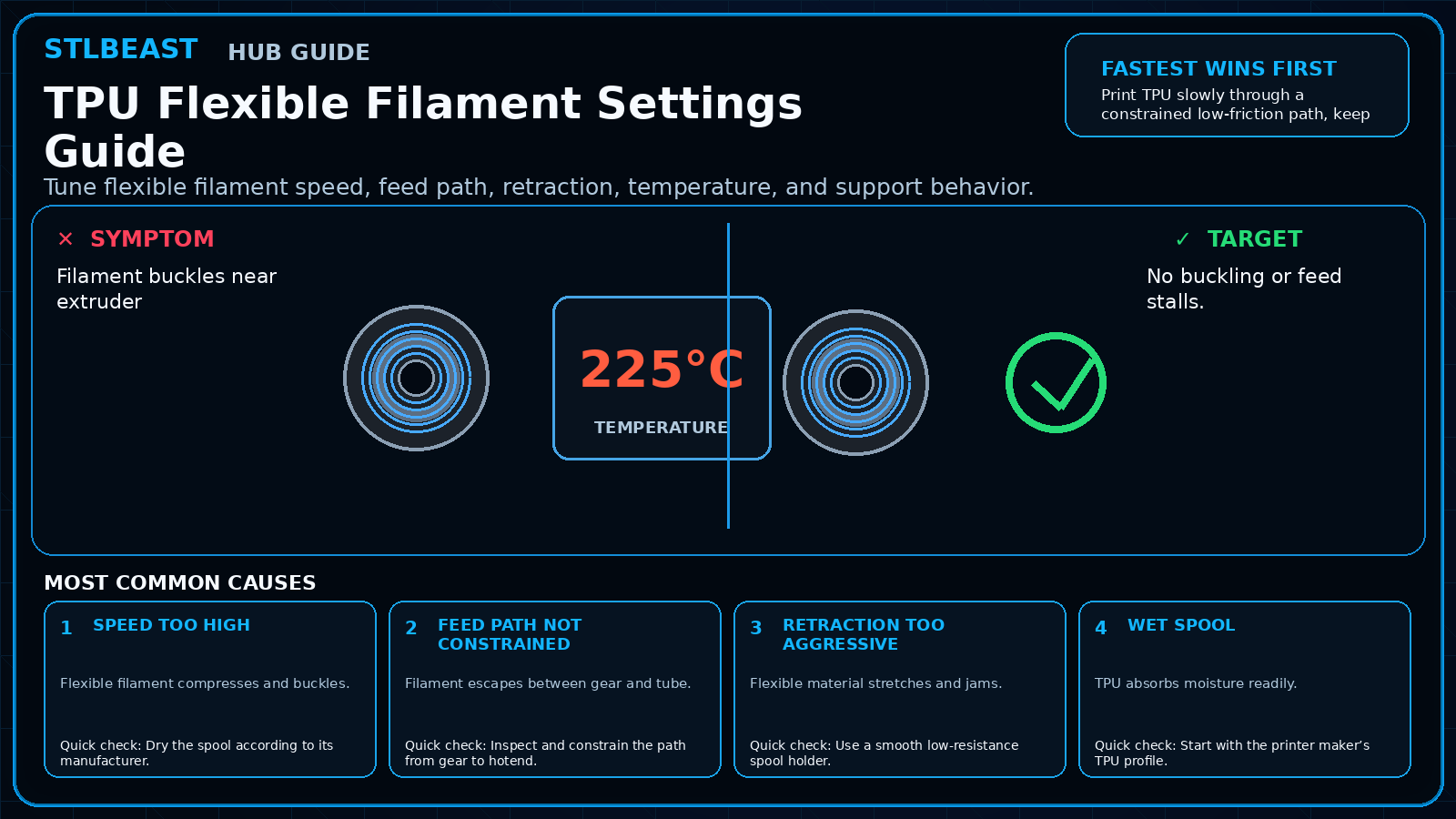
Tune flexible filament speed, feed path, retraction, temperature, and support behavior.
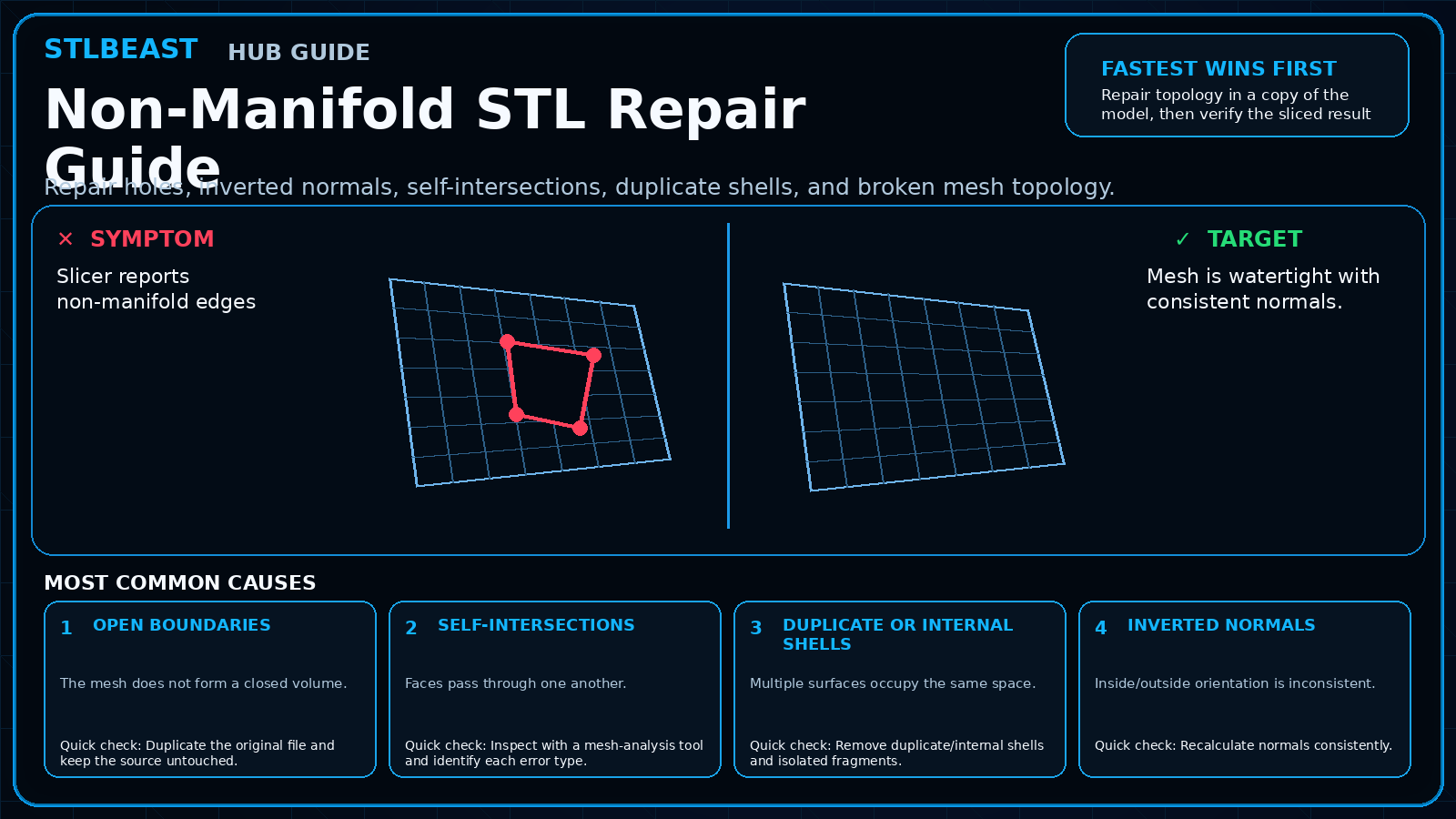
Repair holes, inverted normals, self-intersections, duplicate shells, and broken mesh topology.
Members can connect ranked answers to saved printers, previous failed repairs, full Printer Settings, AI Doctor case history and community-confirmed configurations.